The Learning Cue: Attention
How our focus affects our learning

Where Will the Cue Ball Go?
Ralph Eckert, a pro pool player and teacher from Germany, is about to hit the red 3-ball into the bottom left corner. He asks his students where the cue ball will go if he hits it at a medium speed with no spin.
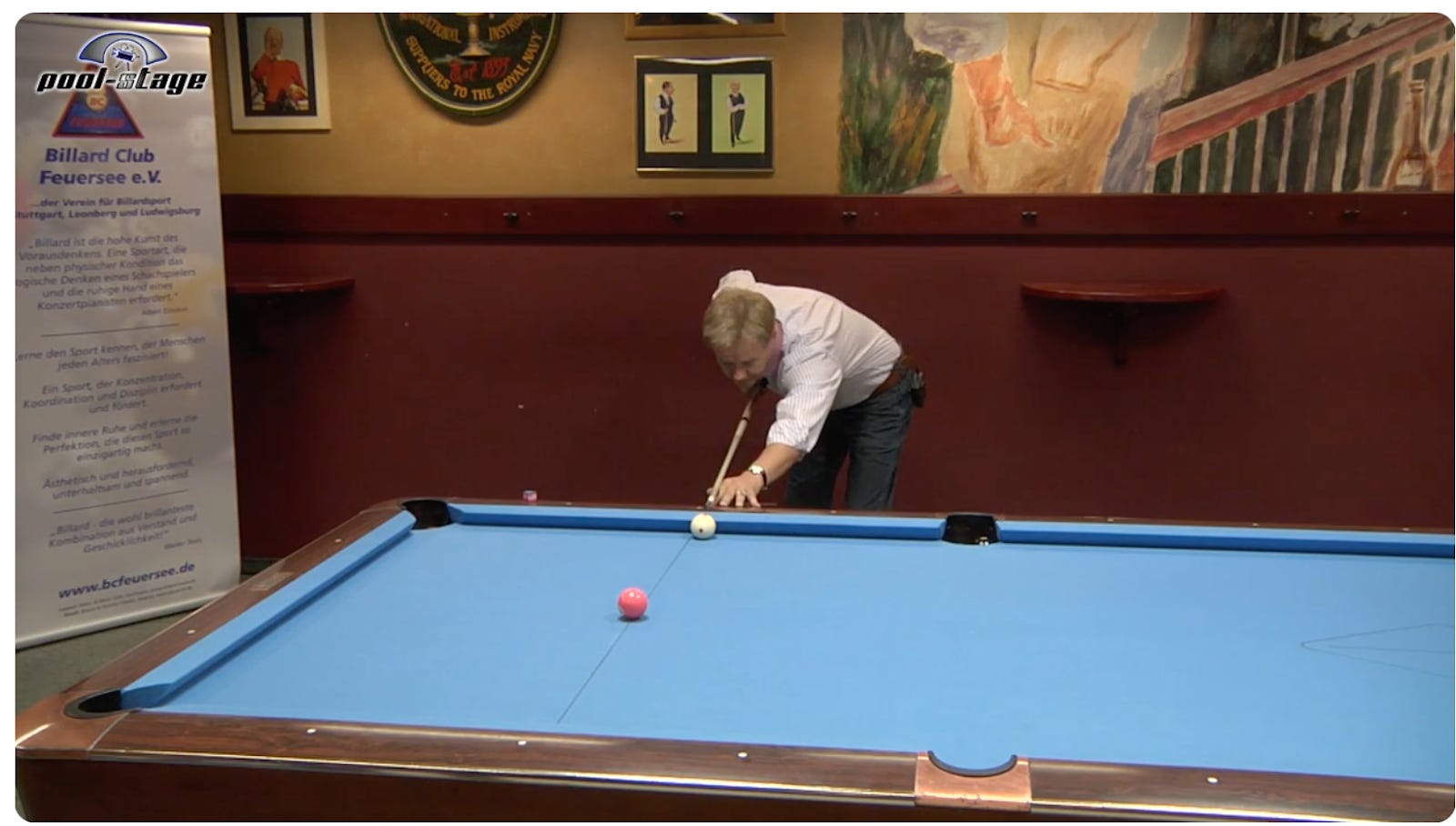
Eckert demos the shot and the cue ball goes along the following path.
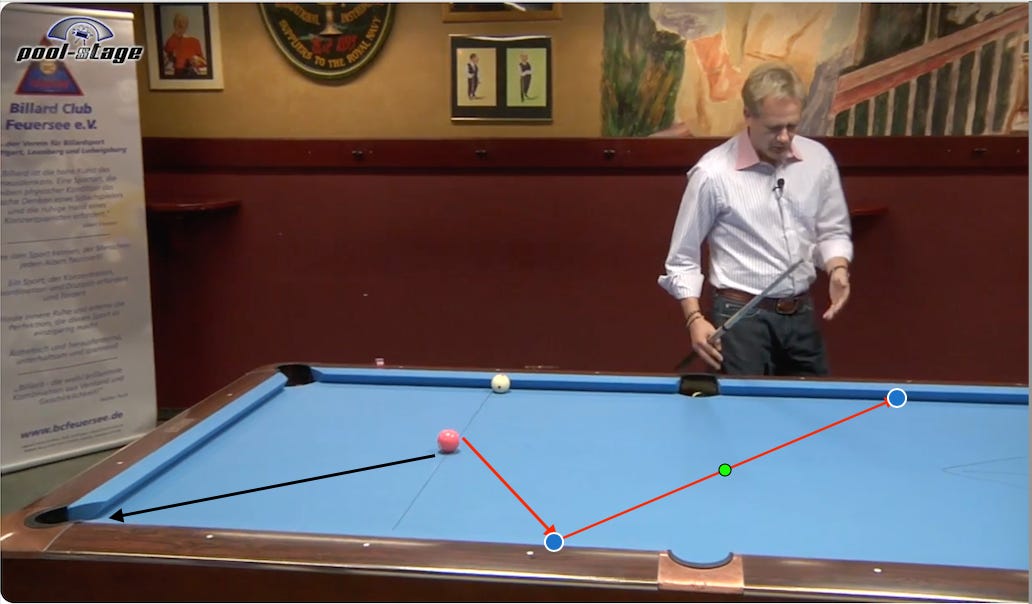
Learning Reference Lines
I remember when I first learned this reference line it seemed like a mystical secret had been revealed to me. My guess about where the cue ball would land was way off. It turns out that there is a pattern with similar shots all sharing a cue ball path that is about the same. Click here if you’d like to watch Eckert demonstrating and explaining this reference line.
For players trying to develop pattern play (the ability to set up a sequence of shots), these reference lines are crucial. (See earlier posts on Developing Strategy and Cognitive Practice for more.)
How Did I Not Know This??!
As I thought more about these reference lines, a larger more philosophical question came into my head. How is it possible that an average pool player, like myself, who has played for decades might not have a clear sense of where the cue ball is going despite having played that shot countless times? How did I not notice after playing so much?
The Role of Attention
In 1999, cognitive scientists Daniel Simons and Christopher Chabris explored this idea in a groundbreaking study on selective attention.

Simon & Chabris
In their famous video experiment, participants were asked to count how many times players passed a basketball.
To answer this question, we need to look at the role of attention in learning. A seminal study on selective attention was done in 1999 by two researchers, Christopher Chabris and Daniel Simons. In the experiment, participants were asked to do the task below while watching a short video.
If you haven’t seen this video, I strongly encourage you to try - seriously, it’s pretty darn cool 🙂. And the whole thing is only 1 min and 22 seconds long. Spoiler alert below!
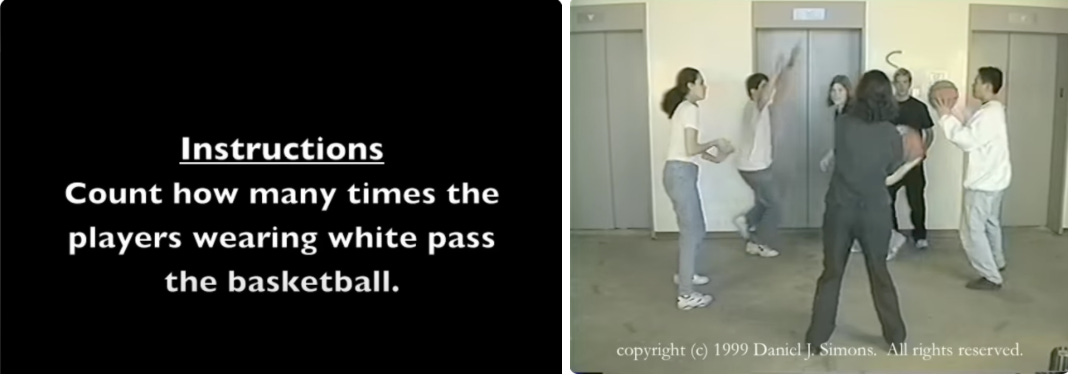
Chabris and Simon had many people watch the video and while participants were focused on counting the passes, they usually completely missed the fact that a person in a gorilla suit walks into the middle of the room, pounds their chest, and walks off. If you’re one of the many (like me!) who watched the video and missed the gorilla, go back and watch it again without counting and you’ll be shocked to suddenly see the hairy fella come striding out.
Inattentional Blindness
This phenomenon is known as inattentional blindness—the failure to notice something unexpected because your attention is focused elsewhere.
Even after playing thousands of hours of pool, many players don’t know the natural path of the cue ball. Why?
Because they’re focused on the object ball, not the cue ball. The cue ball’s movement becomes the invisible gorilla.
“Memory Is the Residue of Thought”
“Memory is the residue of thought”
Dan Willingham, a cognitive scientist, explains this idea in his classic book “Why Don’t Students Like School.” He argues that we remember what we think about, not what we see, hear, or even try to memorize unless we actively think about it. The mind constantly processes vast amounts of sensory information, but only a small fraction gets deeply processed. In the exercise below, Willingham gives an example by asking readers to identify which image is a real penny.
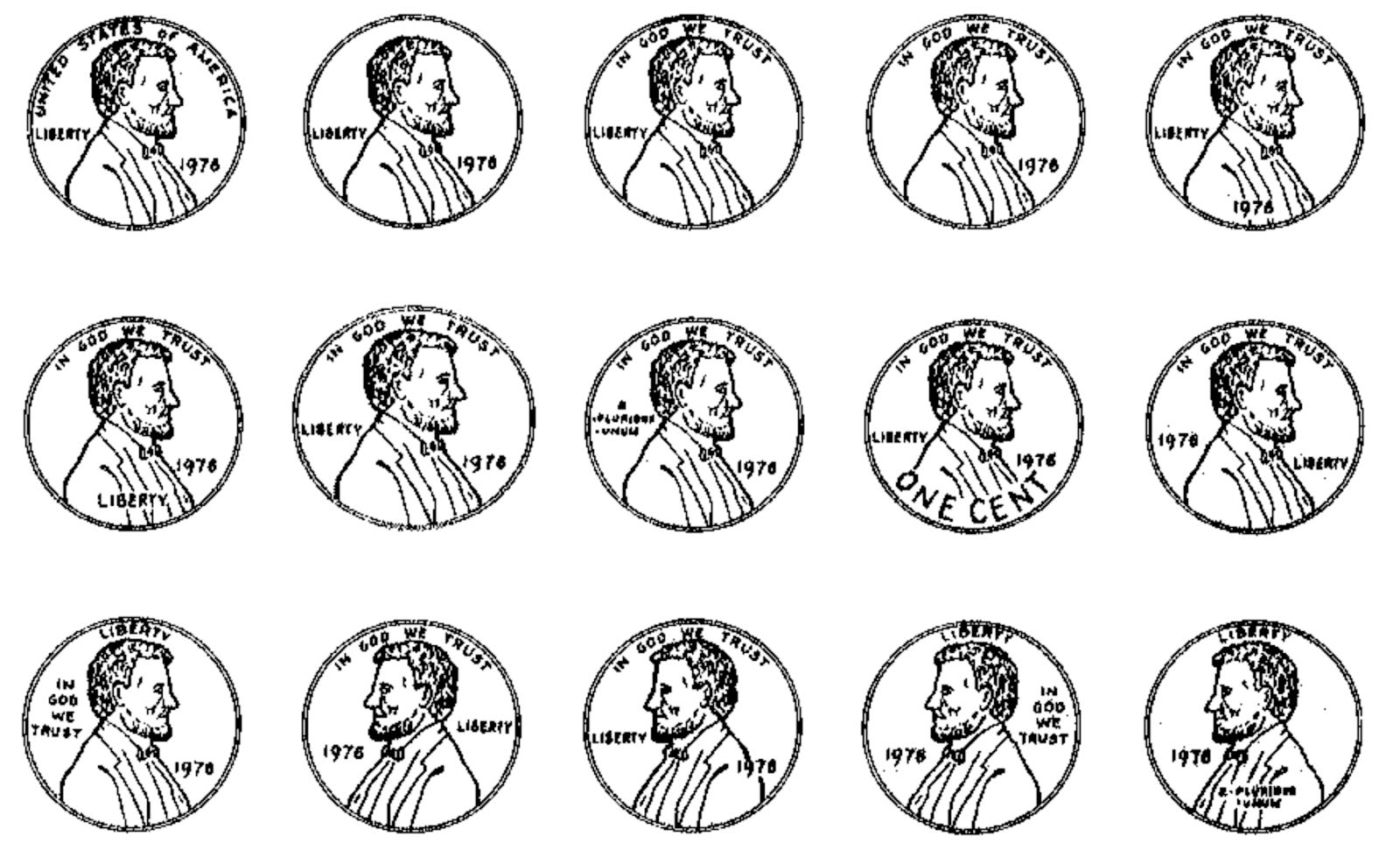
We’ve seen pennies thousands of times, but we’ve rarely thought about their details like which way Lincoln faces or where the words appear. The penny example illustrates that exposure without attention doesn’t lead to learning.
This is a simple and yet profound point in both pool and learning, in general.
Changing the Focus of Practice
If you want to learn the cue ball path, you have to focus on it deliberately in your practice. There are many ways to do this but here are a couple:
🎯 Drill #1: Wagon Wheel
The Wagon Wheel Drill as shown by pool pro, Margaret Fefilova
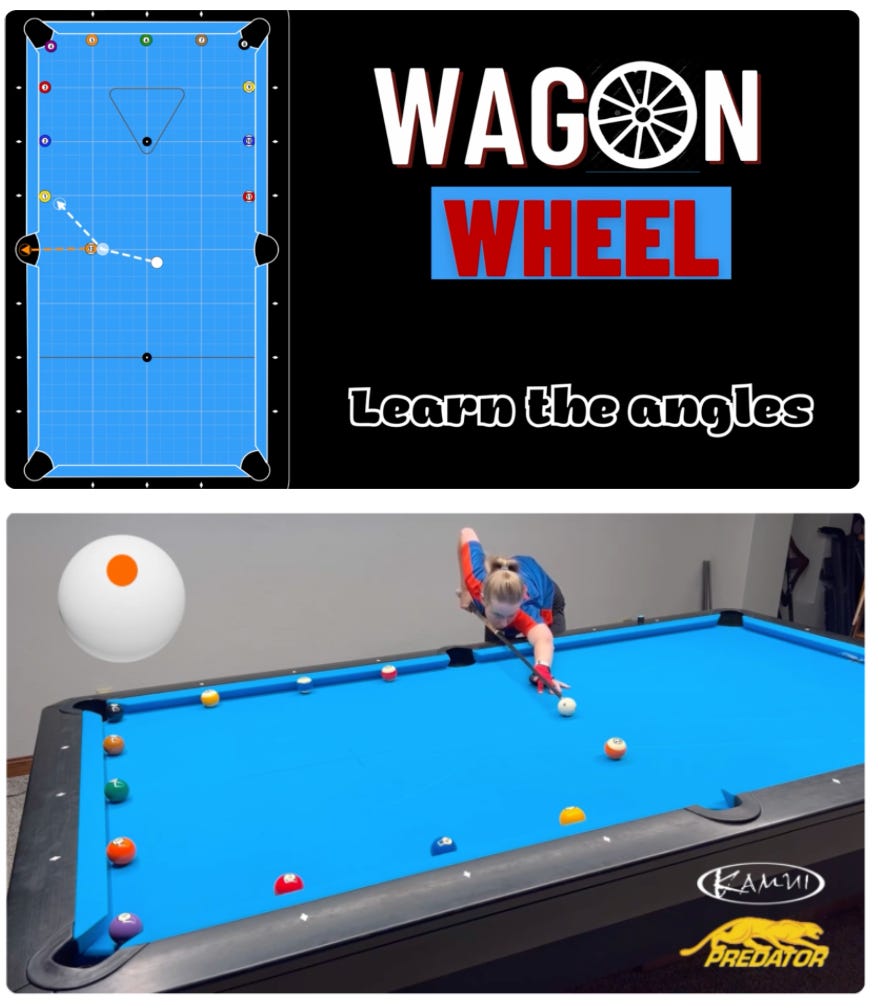
In this exercise, the object ball is an easy shot into the side pocket. The challenge? Use the cue ball to hit specific targets on the rails after making the shot. The focus shifts to the cue ball’s path.
🎯 Drill #2: Natural Angles
Simon Webb - Know Your Natural Angles
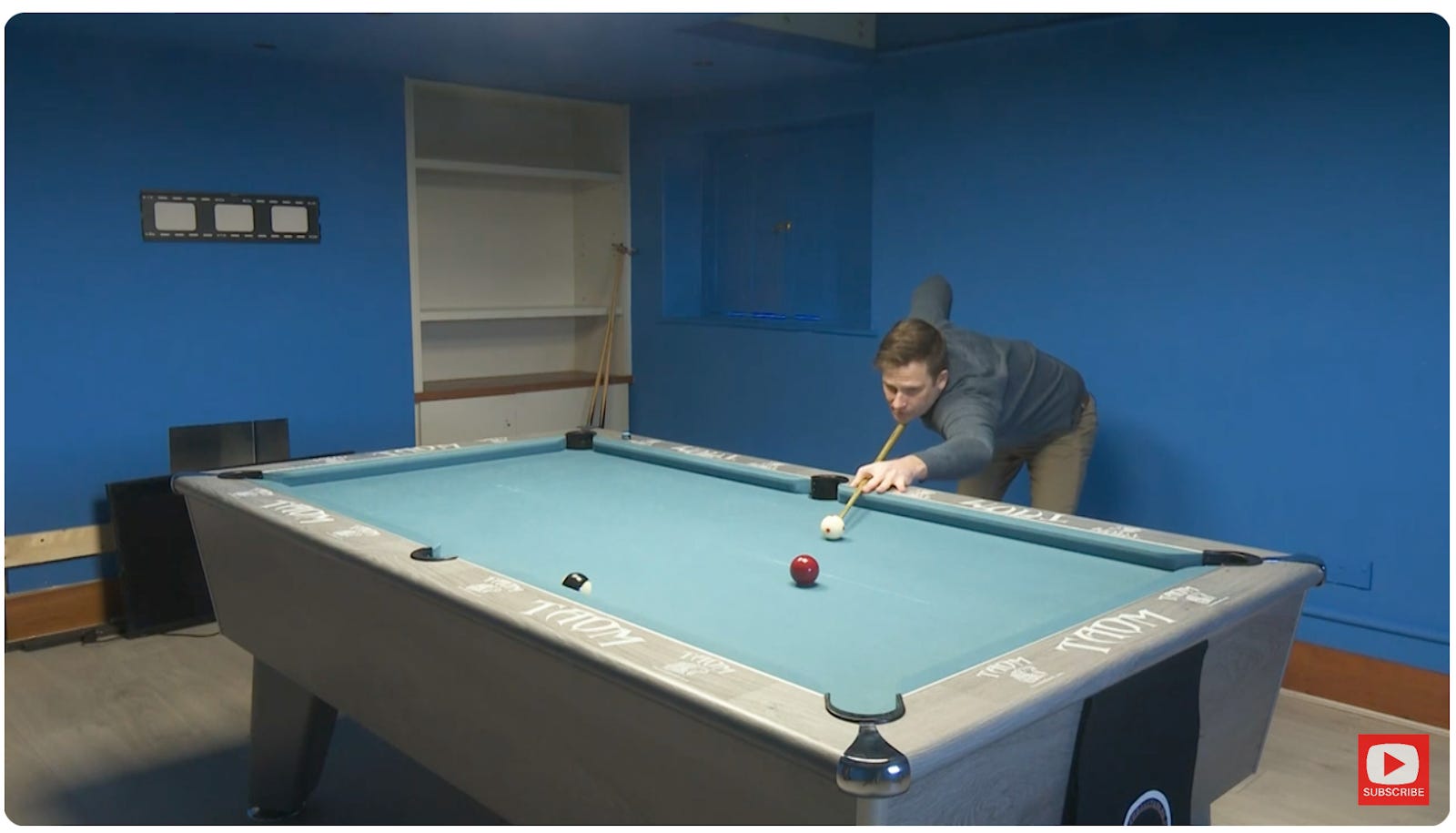
Webb sets up a simple shot and tries to hit a second ball after contact. His goal is to teach natural cue ball paths, discouraging haphazard spin use. This helps players see and internalize predictable paths.
Prediction Error and Learning
Each time you predict the cue ball’s path, shoot, and observe the result, your brain compares expectation with reality. That gap is called prediction error, and it’s a key driver of learning.
Learning happens when your expectations are wrong—if you’re paying attention.
By adjusting your predictions and retesting, your understanding grows more accurate. This is how schemas and mental models of cue ball movement develop over time.
Implications for Teaching
“Pay attention! This will be on the test!” is not enough.
If we want students to learn, we have to guide their attention.
Instead of vague commands, students can benefit from tasks and/or materials that focus their attention:
Provide guiding questions before the reading/lecture
Ask students to look for key ideas
Have students preview and complete an outline of a reading or lecture as they read/listen
Give a focus point during a demo (e.g. “Watch what happens to the cue ball after contact”)
As we have seen in pool and the ‘basketball passing video,’ it’s very possible to pay attention to one thing and miss another thing entirely. Although we don’t want to micro-manage our students, it is important to provide some guidance, focus, or task – especially when we know what we want them to learn! Providing scaffolding like focus questions, an outline of key ideas, or some other kind of task before a lecture, demo, or reading can make a huge difference in student attention, thinking, and learning.
Key Takeaways
Attention shapes learning. We remember what we think about.
Inattentional blindness explains why repeated exposure doesn’t always lead to understanding.
Cue ball paths become visible when practice drills shift focus away from object balls.
Prediction error is a powerful learning tool when we’re paying attention to the outcome.
In both pool and teaching, focus tasks help direct attention and deepen learning.
How About You?
What are other ways that attention has affected your learning in pool or other skills/subjects?
What are other ways of learning/practicing the cue ball path for position play?
How might you apply the ideas of attention in your own learning or teaching?
In the next installment of The Learning Cue, we’ll dive deeper into different types of learning, when explicit instruction helps, and when it doesn’t. Stay tuned!
References
Eckert, R. [Ralph Eckert]. (2016, January 22). Pool Lessons - Reference-Line No. 1 [Video]. YouTube.
Fefilova, M. (2022). Learning the Angles with the Wagon Wheel Drill [YouTube video].
Simons, D., & Chabris, C. (1999). Selective Attention Test [YouTube video].
Webb, S. (2021). Know Your Natural Angles [YouTube video].
Willingham, D. T. (2009). Why don’t students like school? Jossey-Bass.
As they say: "Where attention goes, energy flows." True in so many realms. For learning purposes and also in terms of where we choose to put our attention in terms of the media we consume. If we notice where we put our reading and watching attention and try to be more intentional so that we pay attention beyond headline negative news to uplifting positive stories, perhaps we can all flow with more positive energy. A bit off-track of your topic, but thought I'd share...