The Learning Cue: Direct Instruction vs. Discovery Learning
How explanations become meaningful (and why they are necessary)

Like many folks in the pool world, I started playing in college. I spent so much time in the free 24-hour pool hall at Reed College that I joked I was getting a minor in Billiard Studies. I was obsessed. And yet, despite years and countless hours of playing, I only ever reached a modest level of skill.
Why? Because none of us knew what we were doing and no one was teaching us.
That realization didn’t hit until decades later.
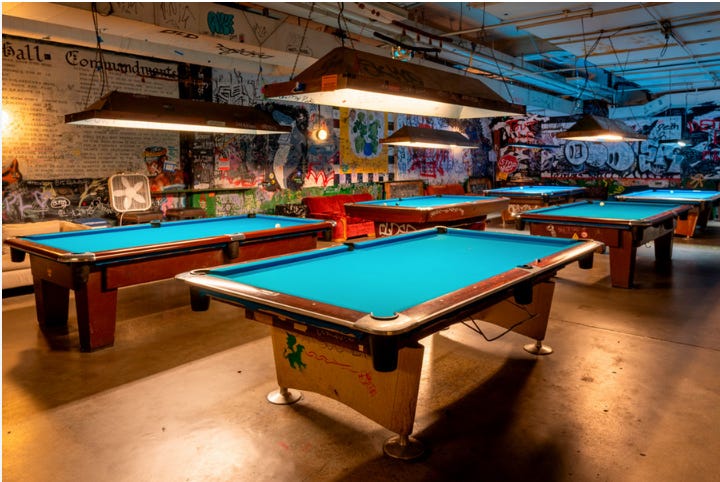
Pool Hall at Reed College - where I spent much of my time in college
From Casual Player to Intentional Learner
In my mid‑forties I met my friend Chad, whose son was classmates with mine. We started playing together on his home table. Our skills were similar, but we both felt the nagging sense that we were missing something fundamental.
Then, on my 50th birthday, Chad surprised me with a lesson from Bob Jewett, a legendary pool instructor who happens to live in Berkeley. That lesson changed everything. Bob not only helped us start to work on our fundamentals, he also opened the door to the world of high‑quality instruction, including YouTubers like Tor Lowry, Dr. Dave, and Sharivari.
This was the moment I finally began to seriously learn pool, not just play it.

Bob Jewett - Here’s a little article about his double life as an engineer and pool player!
The Age-Old Debate: Direct Instruction vs. Discovery Learning
In education, there has long been a fierce debate between:
Direct Instruction
The teacher explains, models, and teaches skills and knowledge explicitly.
Discovery Learning
Students figure out concepts on their own with minimal guidance.
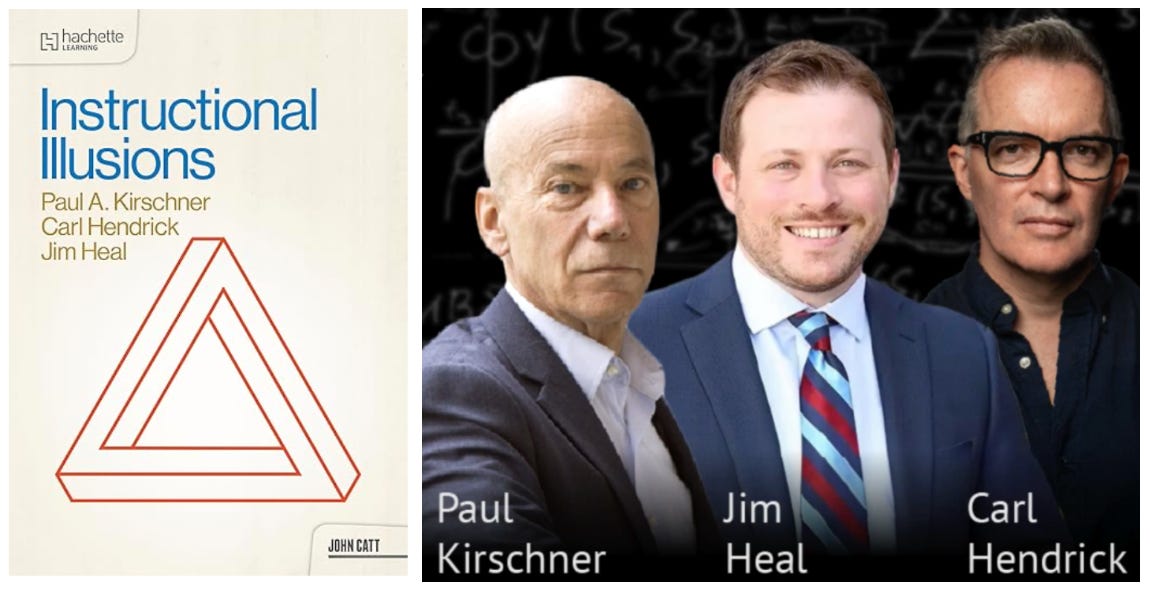
Picture from the YouTube interview on Chalk & Talk
In their book, Instructional Illusions (2025), Kirschner, Hendrick, and Heal summarize the tension perfectly:
“In the red corner [...] we have the ‘sage on the stage’… In the blue corner, [...] the ‘guide on the side’…”
The framing is extreme—but the divide is real. As they explain in their book, pure discovery learning with minimal guidance is one of those ideas that can sound idyllic harkening back to some naturalistic vision of education, but evidence, research, and my own experience shows that it is highly problematic.
A Brief History
Constructivist thinkers from Rousseau to Bruner argued that learners must actively construct knowledge. This is a sound idea and lies in opposition to the traditional image of the student being an empty vessel into which the teacher pours knowledge. Indeed, the Science of Learning has established that learning is an active process in which students connect new knowledge and skills to what they already know.


Jean Jacque Rousseau (1712 - 1778) Jerome Bruner (1915-2016)
Bruner, in fact, developed complex ideas about how to scaffold learning and design what he called a spiral curriculum which helped students build their knowledge and skills. However, over time, the ideas about students actively discovering through experience became, for some, reified into the belief that teachers should avoid giving direct instruction so students could “discover” concepts themselves.
The problem?
Pure discovery doesn’t work very well for most novice learners.
In their now classic 2006 paper, Kirschner, Sweller, and Clark explain exactly why minimal guidance fails—especially for novices in terms of the cognitive architecture of memory (and if you are interested, you can find a link to their paper below in the works cited).
Why Discovery Learning Failed Me at Reed
Thinking back to my college pool experience:
We practiced constantly and developed some basic shot-making skills
We repeated our mistakes
We had no feedback or guidance about what/how to practice
We experimented and theorized
We built bad habits with fundamentals like stroke/stance
We never progressed beyond a low ceiling
In addition, I played for years without ever ‘discovering’ concepts such as: deflection/squirt, throw, the 30-degree rule , the 90-degree rule (Thanks, Dr. Dave!) or proper stroke mechanics and position play.
Even worse, I invented some of my own half‑baked aiming theories and enthusiastically passed them on to friends. (Sorry, friends.)
As I wrote in my earlier post, inattentional blindness explains why players can shoot the same shots for decades without noticing the cue ball path. You don’t learn what you don’t notice.
It was only when I got direct instruction via YouTube explainer videos, lessons with instructors, and brief sessions with advanced players in my league that I started to make progress and learn the above concepts and skills.
That being said, there were also plenty of videos and explanations that didn’t do me much good at all. My eyes glazed over when I couldn’t see the relevance or there was just too much information. Sometimes I just couldn’t connect with the information that was being offered while other times the explanation was confusing and lacked helpful visuals.
So What Actually Works? A Learning-Centered Middle Ground
Not pure lecturing.
Not pure discovery.
But a guided, balanced approach that respects what cognitive science says about how humans learn.
Here’s the sequence I’ve found most effective—as both learner and teacher:
1. Give a Real-World Task First
Show the challenge before the explanation. It could be a problem, question, or task.
This focuses attention, activates curiosity, and creates need for instruction.
2. Let the Student Think / Try (Briefly)
A little exploration builds engagement.
But stop before frustration or confusion sets in.
3. Provide Clear Direct Instruction
Focus the learners with a clear task, and what to pay attention to
Demonstrate the concept. Explain the principle. Model the thinking.
Use effective visuals that highlight key points
Use questions—but don’t force students to “discover” everything.
4. Check for Understanding
Ask questions that require recall or explanation.
This also supports retrieval practice.
5. Let Students Practice
This is where they explore, adapt, make mistakes, self‑correct—and get feedback. In other words, they can discover how this works for themselves through their own experimentation and practice.
6. Recycle the Task + Use Distributed Practice
Return to the task across days and weeks.
This reinforces learning and prevents forgetting.
An Example From Pool: Ron the Pool Student
Here’s a great example of this learning-centered approach:
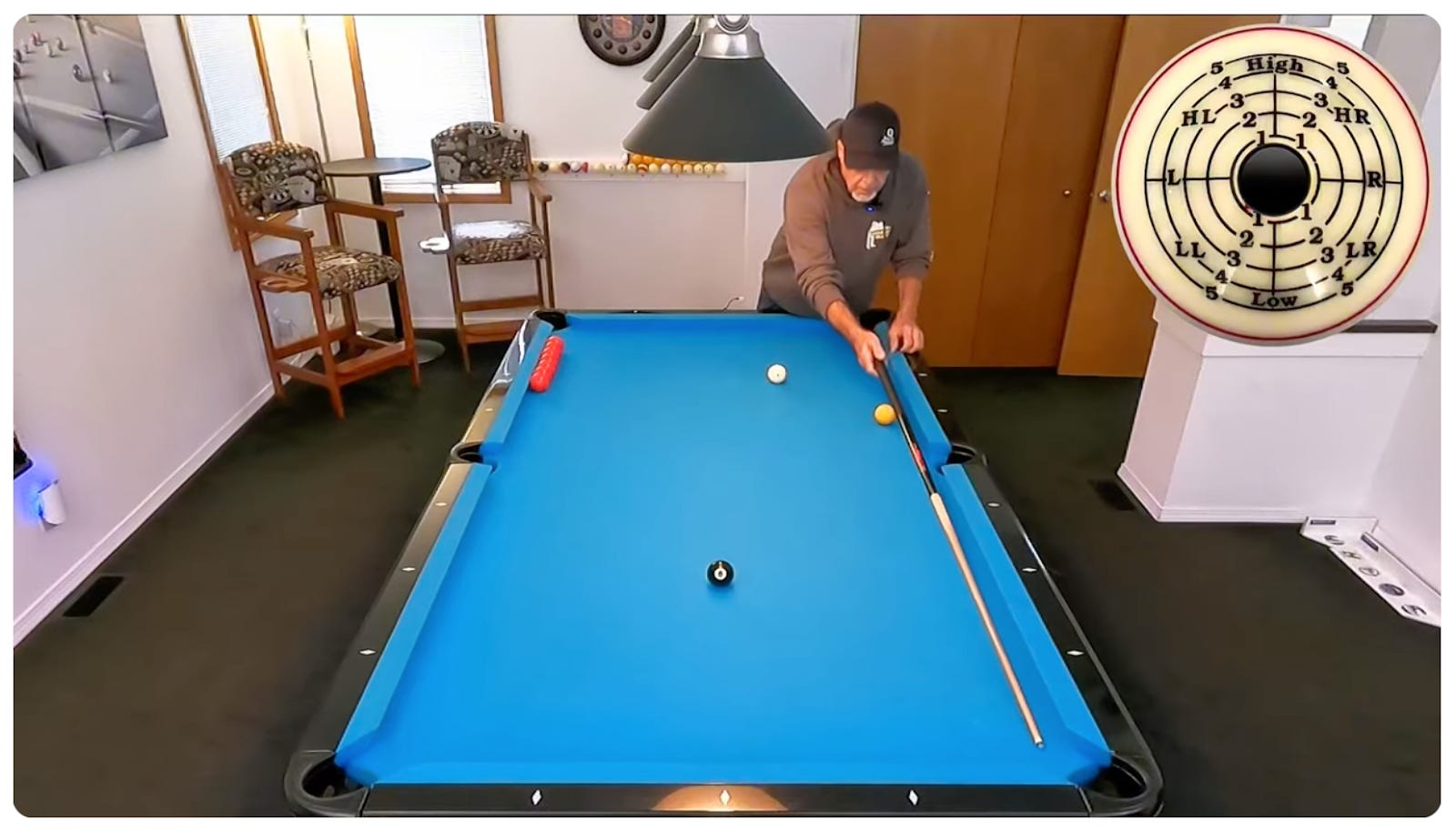
In the video, Ron is shooting the yellow one-ball to the lower right-hand corner. This is a challenging shot in and of itself, but Ron also adds the goal of getting good position on the 8-ball so he can make that after the 1-ball. This is a real-world game situation (BTW, ignore the red balls on the left, which are part of another practice exercise). Ron demonstrates and explains how different spins affect the path of the cue ball and the aim point on the 1-ball. Finally, he offers strategies for how to set up this exercise so that players can practice on their own and discover how it works and feels for themselves.
This is direct instruction—not a lecture with no active engagement from the students
It offers guided discovery and is a balanced middle ground that works.
🧠 A Cross-Disciplinary Pattern
This type of balanced approach appears in the work of multiple learning theorists across decades:
Robert Gagné – Nine Events of Instruction (1965)
Richard Swanson – Whole-Part-Whole (1993)
Jane Willis – Task-Based Language Teaching (1996)
Jeroen van Merriënboer – 4C/ID (1997)
Gregor Novak – Just-in-Time Teaching (1999)
M. David Merrill – First Principles of Instruction (2002)
Most of these thinkers worked independently yet converged on the same idea:
Start with the students engaging with a meaningful context/task/problem/question → teach explicitly → let learners apply and practice with guidance.
This is the opposite of letting beginners wander aimlessly.
It is also the opposite of lecturing at them without context.
Whitehead’s Warning Against “Inert Knowledge”
I’ll close with one of my favorite quotes from Alfred North Whitehead:
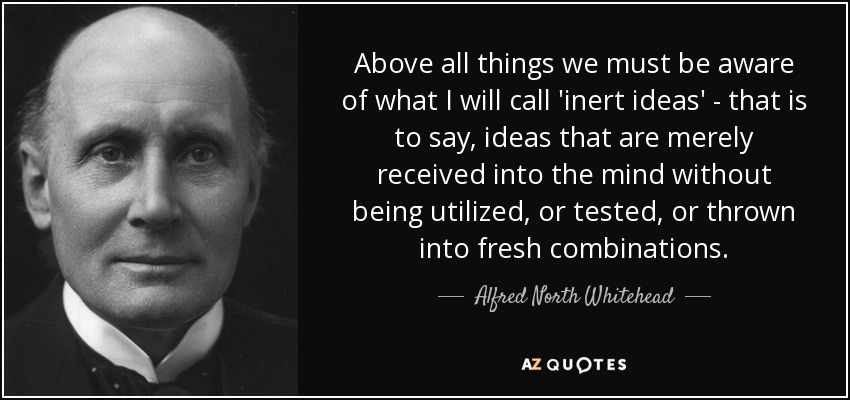
I love this idea of avoiding ‘inert knowledge.’ When teachers use the kind of task-based approach described above, I believe they can create an immediate need among students in which their direct instruction is well-received and the basis for the students’ ongoing practice and meaningful discovery.
🎯 Summing It Up
Pure discovery learning doesn’t work for most beginners.
Without guidance, players build bad habits, wrong theories, and low ceilings.
Direct instruction is powerful, especially for novices.
A learning-centered hybrid: task → instruction → practice → feedback—is ideal.
This approach helps learners avoid inert knowledge, build strong fundamentals, and progress faster.
💬 How About You?
What are your experiences with discovery learning in pool—or other skills?
Have you ever improved dramatically after receiving explicit instruction?
What do you think of the task-based, learning-centered approach?
Reply in the comments—I’d love to hear your stories.
In the next installment of “The Learning Cue,” we’ll explore more about what it means to be an expert and how direct instruction can actually trip up the more advanced learners.
📚 Works Cited
Clark, R. E., Kirschner, P. A., & Sweller, J. (2006). Why minimal guidance during instruction does not work: An analysis of the failure of constructivist, discovery, problem-based, experiential, and inquiry-based teaching. Educational Psychologist, 41(2), 75–86. https://doi.org/10.1207/s15326985ep4102_1
DrDaveBilliards. (2016, March 16). What is squirt? [Video]. YouTube.
Jewett, B. (2017). Bob Jewett’s double life. Berkeley Engineering News. https://engineering.berkeley.edu/news/2017/01/bob-jewetts-double-life-2/
Ron the Pool Student. (2023, August 2). Position play: Shot down the rail [Video]. YouTube.
Stokke, A. (Host). (2024). Interview with Kirschner, Hendrick, and Heal. Chalk & Talk. YouTube.
Whitehead, A. N. (1967). The aims of education and other essays. Free Press.
This article came at the absolute perfect time, seriously. Your insights about direct instruction vs just messing around really resonate. So much tru in this, totally agree.